Nous recommandons le MiniDSP Umik, un micro usb qui ne nécessite pas de préampli. Ce micro est fourni avec deux fichiers de calibration à 0 et 90°. Mais d'autres micros omnidirectionnel peuvent être utilisés. Idéalement, il faudrait une calibration "incidence aléatoire".
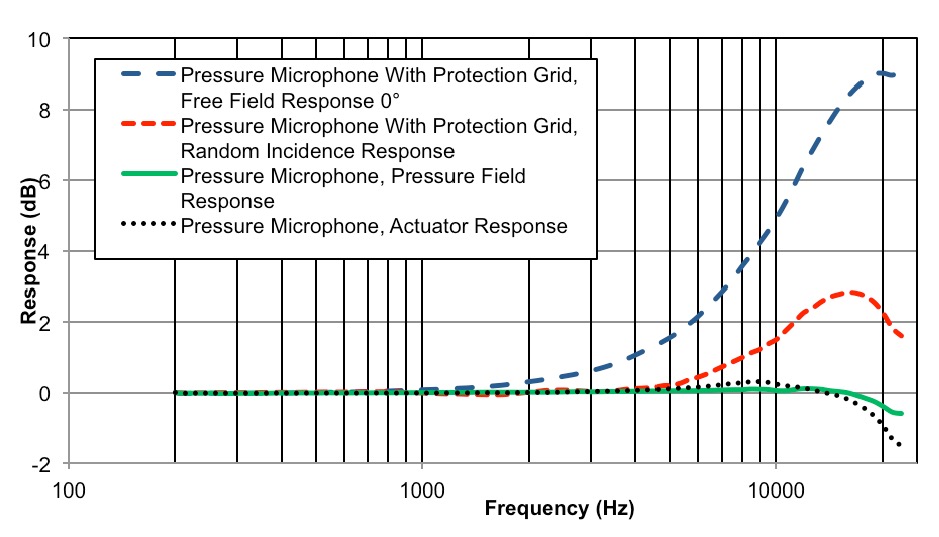
Preferably use the mic vertically and upload the 90° cal file. Ideally the right calibration would be for random incidence but more often you only get 0° and 90° responses. With a Umik the random incidence is nearly 3dB higher at 20kHz than the 90° response. It means that if you use the 90° calibration, you are a bit over-correcting and the real response of your loudspeakers is about 1dB lower at 10kHz and 3dB lower at 20kHz. See hereunder corresponding graph from IEC standards. You can see some examples on measurement mics websites such as GRAS or Bruel&Kjaer.
Une mesure peut être invalidée par certains microphones : la mesure de distortion peut être cachée dans le bruit de fond intrinsèque élevé du microphone. Ceci peut s'améliorer en mesurant à un niveau plus élevé mais attention à votre matériel et à vos oreilles !